Washington Farmland Trust Leans into Land Access for New Growers
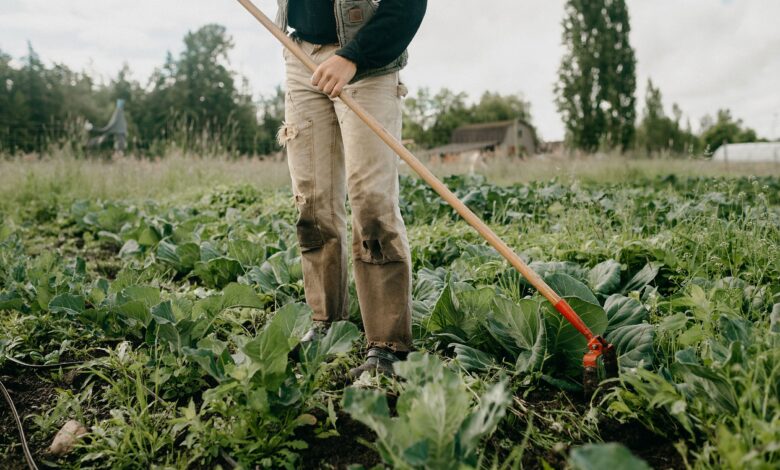
Washington Farmland Trust has taken a hands-on approach in fostering farmer collectives through its Farm to Farmer program, which connects farmers to resources for stable access to land across 17 counties in the state.
Nayla Jimenez has been the Farm to Farmer director for the past two years and has found that Washington Farmland Trust’s knowledge and experience in providing conservation easement assistance, coupled with the unique needs of local farmers, created the space for the Farm to Farmer program to flourish since its origins in 2018.
“We were meeting many people who were mission and value aligned, but we didn’t have any tools or programming to interact with them,” Jimenez said. “Maybe it was a landowner in an area where we couldn’t get funding for farmland conservation easements, or maybe it was a farmer who’s interested in leasing land and not buying it. …
“Our mission says that we are this organization that is promoting keeping farmland in production, protecting farmland, and supporting newer generations, so what could we do?”

The program set out to create a clever and engaging plan for meeting its goals.
Jimenez said, “Could we maybe create a sort of community where we would introduce these farmers and these landowners, and resource those relationships with the information that we have learned over the years of working in farmland?”
This can manifest itself in a few different ways, she explained. “Little things like how different it can be to have somebody introduce you to a specific person, as opposed to calling a building department to see who’s the right person to give you information.”
The answer was the Farm to Farmer program, created with the purpose to serve and provide resources to communities that have faced exclusion to land access, from individual farmers to farmer collectives.
Farmer collectives are a new stake in the Farmer to Farm program and take on a range of shapes and purposes. It can be two producers who go in on purchasing land together, co-ops, mixed use LLCs, or a nonprofit with a farm training program that provides land to their participants.
“What we mean is people who are trying to farm as a group, and that’s actually some of the newest part of our work, and the newest position on our team,” Jiminez stated.

Met with a funding opportunity, a farmers collective manager position was created two years ago to learn, support, and resource farming groups. Filling the position has allowed the Farm to Farmer program to go from supporting three groups up to 16 groups and over 100 people.
“Eighty percent of the collectives we support are serving underserved communities,” she said. “For them a big motivator of farming and owning land collectively is community, and what that community can bring in terms of opportunity and also safety.”
Jimenez added, “Think about how different it is to manage a fence on a farm when you have several farmers as opposed to one, or to weather a personal health surprise when you’re just one landowner versus when there’s several people there.”
Many farmers in the program come with experience farming abroad, looking to grow as a part of a community, or as nonprofits that serve migrant groups that are transitioning from leasing to owning larger parcels of land.
“When you think of a nonprofit that serves an underserved community or underrepresented community, the impact that they can have when they build an asset is even larger,” she said. “So for the business it does make sense for them to seek ownership of the farmland, even with all the complexity that brings.”
This involves creating the financial ability to find and purchase new land but also the mental capacity to understand the agreements being made along the way.
“Take out a pen and paper, let me tell you. That doesn’t do much for people. It might solve it that one time, but people deserve to understand and make decisions for themselves,” she explained. “These are decisions about their farm business, their livelihood, how they interact in their communities, how successful they are. So we really see that as a part of how we have decided to approach and work with our clients in making our team fully bilingual.”

Even though she acknowledges that this is a new program with limited resources, “One thing we could do is learn from every interaction that we have and listen every time that somebody is willing to speak,” Jiminez explained.
She also noted, “The traditional model of land ownership and agriculture in this country has been exclusive. We see a deep inequality in wealth and access to capital, and we believe that the work we’re doing can be part of leveling the playing field, and helping advance work that goes against that inequality in the opposite direction.
“Equity is one of our core values as an organization, and so we believe that lived experience, that diverse voices are critical to all the work that we do in transforming farmland access in agriculture.”
Farm to Farmers is expanding with a new position opening and hopes of new land opportunities through contacting farmers who plan to sell or retire.
Tahja Sims serves as the 2025 American Farmland Trust Agriculture Communications Intern at AGDAILY, with a focus on helping to amplify diversity and minority voices in agriculture. Tahja is currently an agricultural economics major and senior at Texas A&M University. She has served as an intern with the U.S. House of Representatives and is a member of Minorities in Agriculture, Natural Resources and Related Sciences (MANRRS) organization.